The phrase “How is your day going?” is one of the most common questions in English. People use it to show interest, start a conversation, or build rapport.
It feels friendly, natural, and safe. But using the same phrase again and again can sound repetitive, flat, or even lazy—especially in professional or academic settings.
That’s why learning alternative expressions matters. Word choice changes tone. It shows emotional intelligence.
It helps you sound polite at work, warm with friends, and confident in emails. In business, the wrong greeting can feel too casual. In social life, a stiff greeting can feel cold.
Compare:
- Formal: “I hope your day is going well.”
- Informal: “How’s your day so far?”
Same idea. Very different feeling.
This guide helps English learners, professionals, and writers choose the right phrase for the right moment—clearly, naturally, and confidently.
What Does “How Is Your Day Going?” Mean?
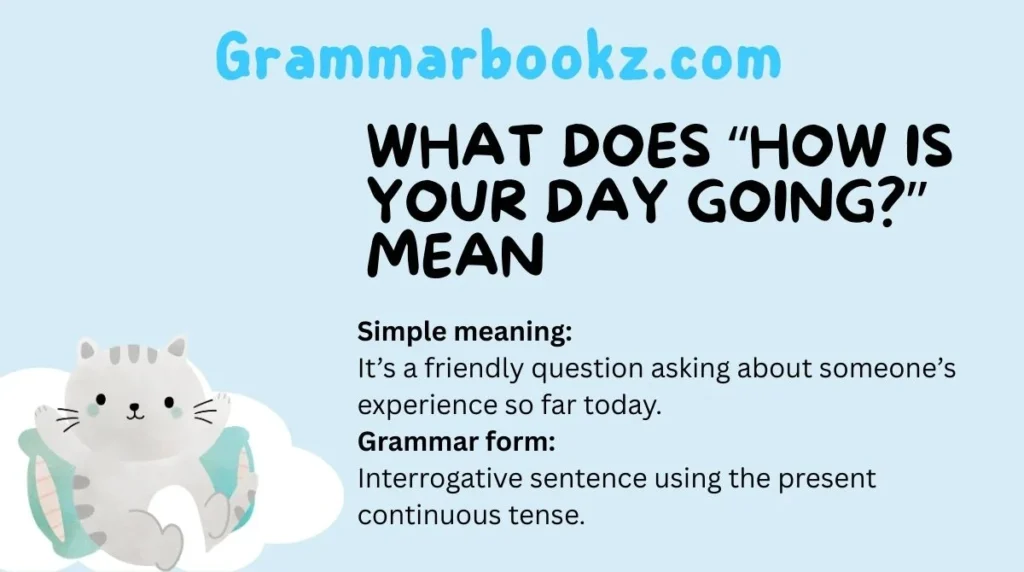
Simple meaning:
It’s a friendly question asking about someone’s experience so far today.
Grammar form:
Interrogative sentence using the present continuous tense.
Tone-related synonyms:
- Friendly: How’s it going today?
- Polite: I hope your day is going well.
- Casual: How’s your day been?
Opposite tone examples:
- Cold: What do you need?
- Rushed: Is this urgent?
Example sentences:
- “Hi Alex, how is your day going?”
- “Just checking in—how’s your day so far?”
When to Use “How Is Your Day Going?”
Spoken English
Perfect for daily conversation. It sounds warm and relaxed.
Business English
Acceptable in casual workplaces or internal chats. Less ideal for first contact.
Emails / Messages
Fine in friendly emails. Risky in very formal or legal communication.
Social media
Common and natural in comments or DMs.
Academic writing
Not suitable. Too conversational.
Professional meetings
Better replaced with more polished alternatives unless the environment is informal.
Is “How Is Your Day Going?” Polite or Professional?
This phrase is polite but casual.
- Polite: Yes
- Neutral: Yes
- Soft: Yes
- Strong: No
- Formal: No
- Professional: Sometimes
Etiquette tip:
Good for coworkers you know. Avoid in first-time corporate emails or executive communication.
Pros & Cons of Using “How Is Your Day Going?”
✔ Pros:
- Friendly and warm
- Easy for beginners
- Sounds natural in speech
- Builds connection quickly
✘ Cons:
- Overused
- Too casual for formal writing
- Weak in professional authority
- Not suitable for academic contexts
Quick Alternatives List (For Busy Readers)
- How’s your day so far?
- I hope your day is going well.
- How have things been today?
- How’s everything going today?
- How are you doing today?
- Hope you’re having a good day.
- How’s your day been treating you?
- How are things on your end?
- How’s your workday going?
- How are you feeling today?
- Is your day going well so far?
- How’s everything so far?
- Trust your day is going smoothly.
- How’s today shaping up for you?
- How are things progressing today?
- I hope today has been kind to you.
- How’s life treating you today?
- How’s your morning/afternoon going?
Main Alternatives Explained
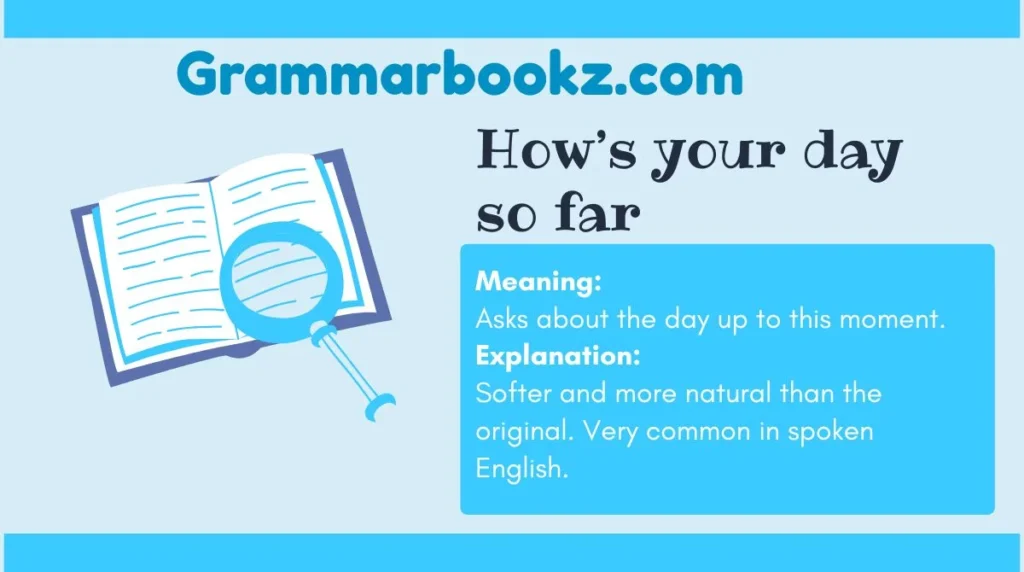
How’s your day so far?
Meaning:
Asks about the day up to this moment.
Explanation:
Softer and more natural than the original. Very common in spoken English.
Grammar Note:
Informal interrogative phrase.
Example Sentence:
“How’s your day so far? Busy morning?”
Best Use:
Informal talk, texts, friendly emails
Worst Use:
Legal or academic writing
Tone:
Friendly, relaxed
Level:
Beginner
Similarity Score:
9/10
Replaceability Tip:
Use when you want to sound natural and conversational.
I hope your day is going well
Meaning:
Expresses goodwill without demanding a response.
Explanation:
Polite and professional. Often used as an opening line in emails.
Grammar Note:
Formal declarative sentence.
Example Sentence:
“I hope your day is going well. I’m writing regarding…”
Best Use:
Emails, workplace, professional messages
Worst Use:
Very casual chats
Tone:
Professional, polite
Level:
Beginner–Intermediate
Similarity Score:
8/10
Replaceability Tip:
Use when you don’t need a reply about their day.
How are you doing today?
Meaning:
Asks about emotional or general state.
Explanation:
Slightly broader than the original phrase.
Grammar Note:
Present continuous question.
Example Sentence:
“Hey, how are you doing today?”
Best Use:
Spoken English, friendly settings
Worst Use:
Formal reports
Tone:
Neutral, friendly
Level:
Beginner
Similarity Score:
7/10
Replaceability Tip:
Use when you care about mood, not schedule.
How’s everything going today?
Meaning:
Asks about life or tasks in general.
Explanation:
Feels open-ended and relaxed.
Grammar Note:
Informal interrogative phrase.
Example Sentence:
“How’s everything going today at work?”
Best Use:
Casual workplace chats
Worst Use:
Formal email openings
Tone:
Friendly
Level:
Beginner
Similarity Score:
8/10
Replaceability Tip:
Good when talking about more than just the day.
I trust your day is going smoothly
Meaning:
Assumes things are positive.
Explanation:
Sounds confident and professional. Common in business writing.
Grammar Note:
Formal declarative phrase.
Example Sentence:
“I trust your day is going smoothly. Please see the update below.”
Best Use:
Professional emails
Worst Use:
Text messages
Tone:
Formal, professional
Level:
Advanced
Similarity Score:
6/10
Replaceability Tip:
Choose this to sound polished and respectful.
How’s your workday going?
Meaning:
Focuses on professional tasks.
Explanation:
Shows awareness of context.
Grammar Note:
Compound noun phrase.
Example Sentence:
“How’s your workday going so far?”
Best Use:
Office conversations
Worst Use:
Personal or emotional discussions
Tone:
Neutral, professional
Level:
Beginner
Similarity Score:
7/10
Replaceability Tip:
Use when speaking to colleagues.
Hope you’re having a good day
Meaning:
Friendly wish, not a question.
Explanation:
Warm and positive. Common in emails and messages.
Grammar Note:
Elliptical sentence (subject omitted).
Example Sentence:
“Hope you’re having a good day!”
Best Use:
Emails, texts
Worst Use:
Formal letters
Tone:
Friendly
Level:
Beginner
Similarity Score:
7/10
Replaceability Tip:
Use when you don’t want to invite conversation.
How’s today treating you?
Meaning:
Asks about the quality of the day.
Explanation:
Idiomatic and expressive.
Grammar Note:
Idiomatic question.
Example Sentence:
“So far, how’s today treating you?”
Best Use:
Casual spoken English
Worst Use:
Professional writing
Tone:
Friendly, informal
Level:
Intermediate
Similarity Score:
6/10
Replaceability Tip:
Use for emotional warmth.
How have things been today?
Meaning:
Asks about experiences over the day.
Explanation:
Reflective and calm.
Grammar Note:
Present perfect tense.
Example Sentence:
“How have things been today at the office?”
Best Use:
Spoken or written conversation
Worst Use:
Very quick chats
Tone:
Neutral
Level:
Intermediate
Similarity Score:
7/10
Replaceability Tip:
Good when checking progress.
How’s your morning/afternoon going?
Meaning:
Time-specific version.
Explanation:
More precise and polite.
Grammar Note:
Time-modified interrogative.
Example Sentence:
“How’s your afternoon going?”
Best Use:
Emails, meetings
Worst Use:
Late-night messages
Tone:
Friendly, polite
Level:
Beginner
Similarity Score:
8/10
Replaceability Tip:
Use for polite awareness of time.
How are things on your end?
Meaning:
Asks about their situation.
Explanation:
Neutral and professional.
Grammar Note:
Prepositional phrase ending.
Example Sentence:
“Everything’s set here—how are things on your end?”
Best Use:
Work emails, remote teams
Worst Use:
Personal emotional talks
Tone:
Professional
Level:
Intermediate
Similarity Score:
6/10
Replaceability Tip:
Best for collaboration updates.
How’s life treating you today?
Meaning:
Broad emotional check-in.
Explanation:
Warm and expressive.
Grammar Note:
Idiomatic expression.
Example Sentence:
“Hey! How’s life treating you today?”
Best Use:
Friends, casual chats
Worst Use:
Business settings
Tone:
Friendly
Level:
Intermediate
Similarity Score:
5/10
Replaceability Tip:
Use when being personal.
Is your day going well so far?
Meaning:
Yes/no version of the original.
Explanation:
Softer and less demanding.
Grammar Note:
Yes/no interrogative.
Example Sentence:
“Just checking—is your day going well so far?”
Best Use:
Polite conversation
Worst Use:
Fast-paced chats
Tone:
Soft, polite
Level:
Beginner
Similarity Score:
9/10
Replaceability Tip:
Good for gentle check-ins.
How’s everything so far today?
Meaning:
General check-in.
Explanation:
Relaxed and open-ended.
Grammar Note:
Informal question.
Example Sentence:
“How’s everything so far today?”
Best Use:
Casual talk
Worst Use:
Formal writing
Tone:
Friendly
Level:
Beginner
Similarity Score:
8/10
Replaceability Tip:
Use when you want flexibility.
How are you feeling today?
Meaning:
Focuses on emotions or health.
Explanation:
More personal than the original.
Grammar Note:
Present continuous.
Example Sentence:
“How are you feeling today after the meeting?”
Best Use:
Supportive conversations
Worst Use:
Professional emails
Tone:
Soft, caring
Level:
Beginner
Similarity Score:
4/10
Replaceability Tip:
Use when empathy matters.
How’s today shaping up for you?
Meaning:
Asks about expectations.
Explanation:
Forward-looking and conversational.
Grammar Note:
Phrasal verb usage.
Example Sentence:
“How’s today shaping up for you so far?”
Best Use:
Workplace chats
Worst Use:
Academic contexts
Tone:
Friendly-professional
Level:
Intermediate
Similarity Score:
6/10
Replaceability Tip:
Use when discussing plans.
I hope today has been productive for you
Meaning:
Professional goodwill.
Explanation:
Focused on results.
Grammar Note:
Formal declarative.
Example Sentence:
“I hope today has been productive for you.”
Best Use:
Business emails
Worst Use:
Personal chats
Tone:
Formal
Level:
Advanced
Similarity Score:
5/10
Replaceability Tip:
Use in performance-focused contexts.
How’s your day been treating you?
Meaning:
Reflective version of the original.
Explanation:
Natural and idiomatic.
Grammar Note:
Present perfect idiom.
Example Sentence:
“So, how’s your day been treating you?”
Best Use:
Casual spoken English
Worst Use:
Formal writing
Tone:
Friendly
Level:
Intermediate
Similarity Score:
7/10
Replaceability Tip:
Use for relaxed conversation.
Mini Dialogue Examples
Formal:
“Good morning, Sarah. I hope your day is going well.”
“Thank you, it is. I appreciate you checking in.”
Informal:
“Hey! How’s your day so far?”
“Pretty good—just busy.”
Business Email Style:
“Hello Mark,
I trust your day is going smoothly. I’m following up on the proposal.”
Mistakes to Avoid
- Using casual phrases in formal emails
- Asking emotional questions in professional settings
- Overusing one phrase repeatedly
- Mixing slang with business tone
- Using the phrase in academic writing
- Asking too personal questions at work
Cultural & Tone Tips
UK English:
More polite and indirect. Phrases like “I hope you’re well” are common.
US English:
Casual and friendly. “How’s your day going?” is very normal.
Casual social English:
Shortened forms dominate. “How’s it going?” feels natural.
Tone matters more than grammar.
Comparison Table
| Phrase | Tone | Best Context | Professional Level | Example |
|---|---|---|---|---|
| I hope your day is going well | Polite | High | “I hope your day is going well.” | |
| How’s your day so far? | Friendly | Conversation | Medium | “How’s your day so far?” |
| I trust your day is going smoothly | Formal | Business | High | “I trust your day is going smoothly.” |
| How are things on your end? | Neutral | Work | Medium | “How are things on your end?” |
| Hope you’re having a good day | Friendly | Messages | Medium | “Hope you’re having a good day!” |
FAQs
Is “how is your day going?” rude?
No. It’s polite and friendly, just informal.
Is it okay in emails?
Yes, for casual or internal emails.
What is the most formal alternative?
“I trust your day is going smoothly.”
What is the most polite alternative?
“I hope your day is going well.”
What should beginners use?
“How’s your day so far?”
Is it okay at work?
Yes, in relaxed workplaces.
Conclusion
Learning other ways to say “how is your day going?” helps you sound natural, confident, and socially aware. One phrase cannot fit every situation.
The right alternative improves tone, builds relationships, and avoids awkward moments—especially in professional and academic environments.
By practicing these expressions in real conversations, emails, and meetings, you strengthen fluency and communication skills. Language grows through variety.
Choose your words wisely, and your English will feel more natural every day.

John Lee is an education-focused writer with a strong interest in English grammar and language learning.
He creates clear, student-friendly content to help learners improve their grammar skills with confidence.