
The phrase “are you mad at me?” is simple, honest, and very human. We use it when we sense tension, silence, or emotional distance. But English is rich.
The way you ask this question can change how safe, polite, or professional it sounds.
Using the same phrase everywhere can feel awkward. It may sound too emotional in business, too direct in emails, or too casual in formal situations.
Choosing the right alternative helps you sound thoughtful, respectful, and confident.
Word choice affects tone. Tone affects relationships. This matters in workplaces, friendships, emails, essays, and daily conversation.
Short contrast example:
- Informal: “Are you mad at me?”
- Formal: “Have I done something to upset you?”
Same idea. Very different feeling.
Other Ways to Say “Are You Mad at Me” Quotes
When you want to ask someone if they’re upset without sounding too direct, there are many polite and thoughtful alternatives you can use. Phrases like “Did I do something wrong?”, “Are we okay?”, or “Have I upset you in any way?” help express concern while keeping the tone gentle. You can also say, “You seem a bit distant, is everything alright?” or “I hope I didn’t hurt your feelings.”
These expressions are perfect for maintaining healthy communication in relationships. Using softer wording not only shows emotional intelligence but also helps avoid misunderstandings. Choosing the right words can make your conversation more meaningful and respectful, especially when emotions are involved.
What Does “Are You Mad at Me?” Mean?
Meaning (student-friendly):
It means you are asking someone if they are angry, upset, or annoyed with you.
Grammar form:
Question sentence using the adjective mad (emotional state).
Common synonyms (similar tone):
- Are you upset with me?
- Did I do something wrong?
Opposite ideas:
- Are we okay?
- Everything’s fine, right?
Sample sentences:
- You’ve been quiet today. Are you mad at me?
- I just want to check—are you mad at me for yesterday?
When to Use “Are You Mad at Me?”
Spoken English
Very common. Natural between friends, family, or partners.
Business English
Risky. Sounds emotional and informal.
Emails / Messages
Acceptable with close colleagues, not ideal in formal emails.
Social Media
Used jokingly or emotionally in casual posts or comments.
Academic Writing
Not suitable.
Professional Meetings
Avoid. Use neutral or respectful alternatives.
Is “Are You Mad at Me?” Polite or Professional?
Politeness level:
- Polite: low to medium
- Neutral: yes
- Strong: emotionally direct
- Soft: depends on tone
Formality:
- Informal
- Not professional
Etiquette tip:
Better for personal conversations. Avoid in corporate emails or formal discussions.
Pros & Cons of Using “Are You Mad at Me?”
✔ Pros:
- Honest and clear
- Easy for beginners
- Emotionally open
✘ Cons:
- Sounds childish in professional settings
- Can pressure the listener
- Too direct for formal communication
Quick Alternatives List (Fast Help)
- Did I upset you?
- Have I done something wrong?
- Is everything okay between us?
- Did something I say bother you?
- Are we good?
- I sense some tension—did I cause it?
- Have I offended you in any way?
- You seem distant—did I do something?
- I hope I didn’t upset you.
- Is there something we should talk about?
- Have I caused any frustration?
- Did I cross a line?
- I want to make sure we’re on good terms.
- Please let me know if I’ve upset you.
Did I Upset You?
Meaning:
Asking if your actions caused negative feelings.
Explanation:
Gentle and respectful. Less emotional than “mad.” Good for clarity.
Grammar Note:
Question using past tense verb.
Example Sentence:
Did I upset you with what I said earlier?
Best Use:
Emails, workplace, polite conversations
Worst Use:
Very casual joking situations
Tone:
Soft, polite
Level:
Beginner
Similarity Score:
9/10
Replaceability Tip:
Use when you want honesty without sounding needy.
Have I Done Something Wrong?
Meaning:
Asking if you made a mistake.
Explanation:
Takes responsibility. Sounds mature and calm.
Grammar Note:
Present perfect question.
Example Sentence:
Have I done something wrong, or is everything okay?
Best Use:
Workplace, relationships, emails
Worst Use:
Playful or sarcastic contexts
Tone:
Neutral, respectful
Level:
Beginner
Similarity Score:
8/10
Replaceability Tip:
Choose this when you want to sound accountable.
Is Everything Okay Between Us?
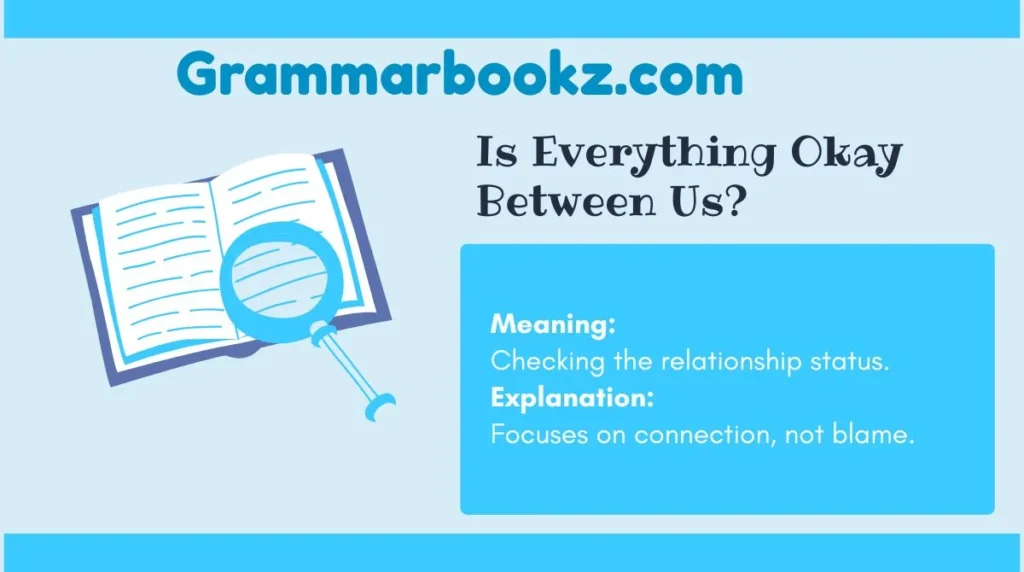
Meaning:
Checking the relationship status.
Explanation:
Focuses on connection, not blame.
Grammar Note:
Question phrase.
Example Sentence:
You’ve been quiet. Is everything okay between us?
Best Use:
Personal, friendly conversations
Worst Use:
Strict professional reports
Tone:
Warm, friendly
Level:
Beginner
Similarity Score:
7/10
Replaceability Tip:
Use when emotions feel unclear.
Did Something I Say Bother You?
Meaning:
Asking if your words caused discomfort.
Explanation:
Specific and thoughtful. Encourages discussion.
Grammar Note:
Past simple question.
Example Sentence:
Did something I say bother you during the meeting?
Best Use:
Workplace, discussions
Worst Use:
Casual joking
Tone:
Professional, calm
Level:
Intermediate
Similarity Score:
8/10
Replaceability Tip:
Use when communication matters.
Are We Good?
Meaning:
Casual check for no conflict.
Explanation:
Short and informal. Common in US English.
Grammar Note:
Colloquial expression.
Example Sentence:
Hey, are we good after yesterday?
Best Use:
Friends, texting
Worst Use:
Formal emails
Tone:
Casual
Level:
Beginner
Similarity Score:
6/10
Replaceability Tip:
Only use with close contacts.
I Sense Some Tension—Did I Cause It?
Meaning:
Acknowledging emotional change.
Explanation:
Emotionally intelligent and mature.
Grammar Note:
Statement plus question.
Example Sentence:
I sense some tension—did I cause it?
Best Use:
Professional discussions
Worst Use:
Very casual chats
Tone:
Professional, soft
Level:
Advanced
Similarity Score:
7/10
Replaceability Tip:
Use in leadership or mediation.
Have I Offended You in Any Way?
Meaning:
Asking if you caused offense.
Explanation:
Formal and respectful.
Grammar Note:
Present perfect.
Example Sentence:
Please let me know if I’ve offended you in any way.
Best Use:
Emails, formal settings
Worst Use:
Text messages
Tone:
Formal
Level:
Intermediate
Similarity Score:
8/10
Replaceability Tip:
Best for workplace communication.
You Seem Distant—Did I Do Something?
Meaning:
Noticing emotional change.
Explanation:
Observational, not accusatory.
Grammar Note:
Statement plus question.
Example Sentence:
You seem distant—did I do something?
Best Use:
Personal conversations
Worst Use:
Public discussions
Tone:
Soft, caring
Level:
Intermediate
Similarity Score:
7/10
Replaceability Tip:
Use when emotions matter more than facts.
I Hope I Didn’t Upset You
Meaning:
Expressing concern politely.
Explanation:
Gentle and indirect.
Grammar Note:
Statement.
Example Sentence:
I hope I didn’t upset you with my comment.
Best Use:
Emails, polite speech
Worst Use:
Confrontational moments
Tone:
Polite
Level:
Beginner
Similarity Score:
6/10
Replaceability Tip:
Good when you don’t expect conflict.
Is There Something We Should Talk About?
Meaning:
Opening conversation gently.
Explanation:
Non-blaming and mature.
Grammar Note:
Question phrase.
Example Sentence:
Is there something we should talk about?
Best Use:
Workplace, relationships
Worst Use:
Urgent conflicts
Tone:
Neutral
Level:
Intermediate
Similarity Score:
5/10
Replaceability Tip:
Use when unsure of the issue.
Have I Caused Any Frustration?
Meaning:
Checking emotional impact.
Explanation:
Professional and calm.
Grammar Note:
Present perfect.
Example Sentence:
Have I caused any frustration with the delay?
Best Use:
Business emails
Worst Use:
Casual chats
Tone:
Professional
Level:
Advanced
Similarity Score:
7/10
Replaceability Tip:
Perfect for corporate tone.
Did I Cross a Line?
Meaning:
Asking if you went too far.
Explanation:
Direct but respectful.
Grammar Note:
Idiomatic expression.
Example Sentence:
If I crossed a line, I apologize.
Best Use:
Honest discussions
Worst Use:
Very formal writing
Tone:
Direct
Level:
Intermediate
Similarity Score:
6/10
Replaceability Tip:
Use when boundaries matter.
I Want to Make Sure We’re on Good Terms
Meaning:
Confirming positive relationship.
Explanation:
Diplomatic and mature.
Grammar Note:
Formal statement.
Example Sentence:
I want to make sure we’re on good terms moving forward.
Best Use:
Professional settings
Worst Use:
Casual texting
Tone:
Formal
Level:
Advanced
Similarity Score:
5/10
Replaceability Tip:
Best for resolving tension professionally.
Mini Dialogue Examples
Formal:
Manager: “I hope I didn’t upset you during the review.”
Employee: “Not at all. I appreciate the feedback.”
Informal:
A: “You’ve been quiet. Are we good?”
B: “Yeah, just tired.”
Business Email Style:
“I wanted to check if anything I said caused frustration. Please let me know.”
Mistakes to Avoid
- Using “are you mad at me?” in formal emails
- Sounding accusatory instead of curious
- Overusing emotional language at work
- Mixing slang with professional tone
- Asking publicly instead of privately
- Repeating the question too often
Cultural & Tone Tips
US English:
Direct but casual expressions are common.
UK English:
Softer, indirect phrasing is preferred.
Casual Social English:
Short forms like “are we okay?” feel natural.
Native speakers notice tone more than words.
Comparison Table
| Phrase | Tone | Best Context | Professional Level | Example |
|---|---|---|---|---|
| Did I upset you? | Polite | Medium | Did I upset you earlier? | |
| Are we good? | Casual | Friends | Low | Are we good now? |
| Have I offended you? | Formal | Work | High | Have I offended you? |
| Is everything okay between us? | Warm | Personal | Medium | Is everything okay? |
| Have I caused frustration? | Professional | Business | High | Have I caused frustration? |
FAQs
Is “are you mad at me?” rude?
No, but it is informal and emotional.
Is it okay in emails?
Only with close colleagues.
What is the most formal alternative?
“Have I offended you in any way?”
What is the most polite alternative?
“I hope I didn’t upset you.”
What should beginners use?
“Did I do something wrong?”
What sounds most professional?
“Have I caused any frustration?”
Conclusion
Learning other ways to say “are you mad at me?” helps you sound more confident and thoughtful. Different situations need different tones. What works with friends may fail at work.
Strong alternatives improve clarity, protect relationships, and show emotional intelligence. Practice these phrases in real conversations.
Notice how people respond. Over time, your English will feel more natural, flexible, and professional.

John Lee is an education-focused writer with a strong interest in English grammar and language learning.
He creates clear, student-friendly content to help learners improve their grammar skills with confidence.