“Happy Birthday” is one of the most common phrases in English. Everyone knows it. Everyone uses it.
But using the same words again and again can feel flat, rushed, or even careless—especially in professional emails, formal messages, or thoughtful cards.
Choosing the right alternative matters because word choice changes tone. A casual phrase works for friends.
A polished phrase works better for bosses, clients, or elders. In writing, variety also shows stronger language skills and cultural awareness.
For English learners and professionals, learning alternatives helps you sound natural, confident, and respectful in different situations—business emails, social media posts, speeches, or daily conversation.
Short contrast example:
- Formal: Wishing you a wonderful birthday and continued success.
- Informal: Hope your birthday is amazing!
Small changes. Big difference.
What Does “Happy Birthday” Mean?
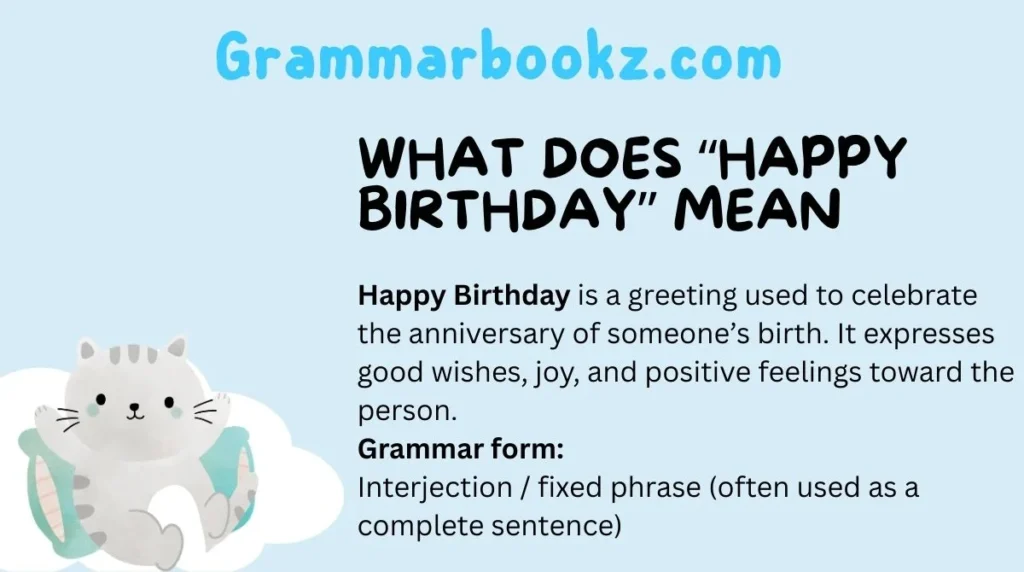
Happy Birthday is a greeting used to celebrate the anniversary of someone’s birth. It expresses good wishes, joy, and positive feelings toward the person.
Grammar form:
Interjection / fixed phrase (often used as a complete sentence)
Similar tone expressions:
- Best wishes
- Many happy returns
Opposite or mismatched tone examples:
- Ignoring the day
- Cold or silent response
Sample sentences:
- Happy Birthday! I hope you enjoy your day.
- Everyone at the office said Happy Birthday to her.
When to Use “Happy Birthday”
Spoken English
Perfect for daily conversation with friends, family, and colleagues.
Business English
Acceptable, but sometimes too casual for senior staff or clients.
Emails / Messages
Fine for short notes. Can feel basic in formal emails.
Social Media
Very common. Often paired with emojis or images.
Academic Writing
Not used. Too personal and informal.
Professional Meetings
Okay in relaxed teams. Not ideal in formal settings.
Is “Happy Birthday” Polite or Professional?
The phrase is polite and friendly, but not always professional.
- Polite: Yes
- Neutral: Yes
- Strong: No
- Soft: Yes
Formal vs Informal:
- Informal by default
- Semi-formal with added wording
Etiquette tip:
Good for coworkers and friends. Avoid using it alone in corporate emails to senior leaders. Add context or choose a more refined alternative.
Pros & Cons of Using “Happy Birthday”
✔ Pros:
- Simple and universal
- Easy for beginners
- Warm and friendly
✘ Cons:
- Sounds repetitive
- Too casual for formal writing
- Lacks personalization
Quick Alternatives List (One-Line)
- Wishing you a wonderful birthday
- Many happy returns
- Best wishes on your birthday
- Warmest birthday wishes
- Have a fantastic birthday
- Wishing you joy on your special day
- Celebrating you today
- Sending birthday greetings
- Hope your day is full of joy
- Wishing you continued success and happiness
- Enjoy your special day
- Heartfelt birthday wishes
- A very happy birthday to you
- With best wishes on your birthday
- Cheers to another great year
Wishing You a Wonderful Birthday
Meaning:
A warm and positive birthday greeting.
Explanation:
More thoughtful than “Happy Birthday.” It sounds kind and complete. Often used in cards and messages.
Grammar Note:
Formal phrase
Example Sentence:
Wishing you a wonderful birthday filled with happiness.
Best Use:
Email, card, workplace
Worst Use:
Very casual chat slang
Tone:
Friendly, polite
Level:
Beginner
Similarity Score:
9/10
Replaceability Tip:
Use when you want to sound warm but not too casual.
Many Happy Returns
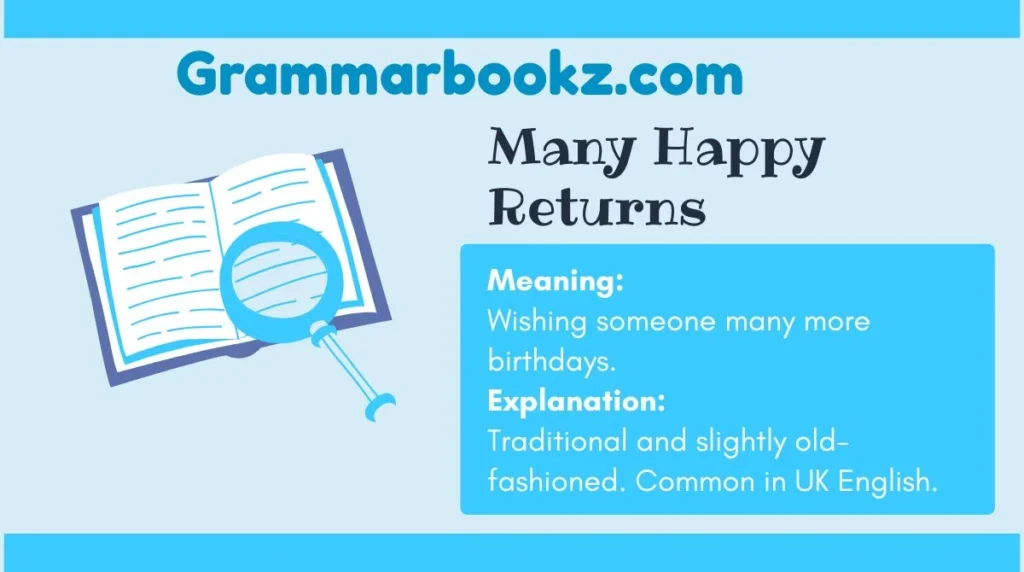
Meaning:
Wishing someone many more birthdays.
Explanation:
Traditional and slightly old-fashioned. Common in UK English.
Grammar Note:
Idiomatic phrase
Example Sentence:
Many happy returns on your birthday.
Best Use:
Formal, cards, UK settings
Worst Use:
Casual texting
Tone:
Formal, classic
Level:
Intermediate
Similarity Score:
8/10
Replaceability Tip:
Best when writing to elders or in formal cards.
Best Wishes on Your Birthday
Meaning:
Sending positive thoughts for the birthday.
Explanation:
Professional and respectful. Common in business communication.
Grammar Note:
Formal phrase
Example Sentence:
Best wishes on your birthday and the year ahead.
Best Use:
Workplace, email
Worst Use:
Teen or casual chats
Tone:
Professional
Level:
Beginner
Similarity Score:
8/10
Replaceability Tip:
Choose this for bosses or clients.
Warmest Birthday Wishes
Meaning:
Very kind birthday greeting.
Explanation:
Adds emotional warmth. Sounds thoughtful and caring.
Grammar Note:
Formal phrase
Example Sentence:
Warmest birthday wishes to you and your family.
Best Use:
Cards, messages
Worst Use:
Very formal reports
Tone:
Soft, friendly
Level:
Beginner
Similarity Score:
9/10
Replaceability Tip:
Good when you want to sound caring.
Have a Fantastic Birthday
Meaning:
Hoping the day is great.
Explanation:
Energetic and cheerful. Casual but positive.
Grammar Note:
Imperative phrase
Example Sentence:
Have a fantastic birthday—enjoy every moment!
Best Use:
Friends, texts, social media
Worst Use:
Formal emails
Tone:
Friendly
Level:
Beginner
Similarity Score:
9/10
Replaceability Tip:
Use with people you know well.
Wishing You Joy on Your Special Day
Meaning:
Expressing happiness and care.
Explanation:
Gentle and thoughtful. Less common, sounds elegant.
Grammar Note:
Formal phrase
Example Sentence:
Wishing you joy on your special day.
Best Use:
Cards, emails
Worst Use:
Fast chat replies
Tone:
Soft, polite
Level:
Intermediate
Similarity Score:
7/10
Replaceability Tip:
Good for meaningful messages.
Celebrating You Today
Meaning:
Recognizing the person.
Explanation:
Modern and warm. Focuses on the person, not just the date.
Grammar Note:
Present participle phrase
Example Sentence:
Celebrating you today—happy birthday!
Best Use:
Social media
Worst Use:
Formal business writing
Tone:
Friendly
Level:
Intermediate
Similarity Score:
6/10
Replaceability Tip:
Use when being personal and modern.
Sending Birthday Greetings
Meaning:
Delivering birthday wishes.
Explanation:
Neutral and safe. Common in emails.
Grammar Note:
Verb phrase
Example Sentence:
Sending birthday greetings from the entire team.
Best Use:
Workplace, email
Worst Use:
Close friends
Tone:
Neutral
Level:
Beginner
Similarity Score:
8/10
Replaceability Tip:
Use in group or team messages.
Hope Your Day Is Full of Joy
Meaning:
Wishing happiness.
Explanation:
Positive and emotional. Not directly saying birthday.
Grammar Note:
Clause
Example Sentence:
Hope your day is full of joy and smiles.
Best Use:
Texts, cards
Worst Use:
Formal announcements
Tone:
Soft
Level:
Beginner
Similarity Score:
6/10
Replaceability Tip:
Good as an add-on line.
Wishing You Continued Success and Happiness
Meaning:
Formal good wishes.
Explanation:
Professional and future-focused.
Grammar Note:
Formal phrase
Example Sentence:
Wishing you continued success and happiness on your birthday.
Best Use:
Corporate emails
Worst Use:
Casual chats
Tone:
Professional
Level:
Intermediate
Similarity Score:
7/10
Replaceability Tip:
Use in business settings.
Enjoy Your Special Day
Meaning:
Encouraging enjoyment.
Explanation:
Friendly and short. Often paired with another phrase.
Grammar Note:
Imperative phrase
Example Sentence:
Enjoy your special day!
Best Use:
Text messages
Worst Use:
Formal letters
Tone:
Friendly
Level:
Beginner
Similarity Score:
7/10
Replaceability Tip:
Works well after another greeting.
Heartfelt Birthday Wishes
Meaning:
Deep and sincere wishes.
Explanation:
Emotional and caring. Often written.
Grammar Note:
Noun phrase
Example Sentence:
Heartfelt birthday wishes to you.
Best Use:
Cards
Worst Use:
Quick chats
Tone:
Soft
Level:
Intermediate
Similarity Score:
8/10
Replaceability Tip:
Use when emotion matters.
A Very Happy Birthday to You
Meaning:
Stronger form of Happy Birthday.
Explanation:
Slightly more formal and complete.
Grammar Note:
Fixed phrase
Example Sentence:
A very happy birthday to you and your loved ones.
Best Use:
Emails, cards
Worst Use:
Super casual slang chats
Tone:
Polite
Level:
Beginner
Similarity Score:
10/10
Replaceability Tip:
Easy upgrade from the original phrase.
With Best Wishes on Your Birthday
Meaning:
Formal good wishes.
Explanation:
Polished and respectful.
Grammar Note:
Formal closing phrase
Example Sentence:
With best wishes on your birthday, from the team.
Best Use:
Formal emails
Worst Use:
Text messages
Tone:
Formal
Level:
Intermediate
Similarity Score:
8/10
Replaceability Tip:
Use as an email closing line.
Cheers to Another Great Year
Meaning:
Celebrating the year ahead.
Explanation:
Casual and upbeat.
Grammar Note:
Idiomatic phrase
Example Sentence:
Cheers to another great year ahead!
Best Use:
Friends, social media
Worst Use:
Formal writing
Tone:
Casual
Level:
Intermediate
Similarity Score:
6/10
Replaceability Tip:
Use with close friends only.
Mini Dialogue Examples
Formal:
Manager: Wishing you a wonderful birthday and continued success.
Employee: Thank you very much. I appreciate it.
Informal:
Friend: Cheers to another great year!
You: Thanks! Let’s celebrate soon.
Business Email:
Subject: Birthday Wishes
Message: Best wishes on your birthday. We hope the year ahead brings success and good health.
Mistakes to Avoid
- Using casual phrases in formal emails
- Overusing emojis in professional messages
- Mixing slang with formal language
- Writing very long birthday messages at work
- Forgetting cultural tone differences
- Copy-pasting the same phrase everywhere
Cultural & Tone Tips
UK English:
More traditional phrases like Many happy returns are common.
US English:
Friendly and upbeat phrases are preferred.
Casual Social English:
Short, fun expressions work best.
Native speakers notice tone quickly. Matching context is key.
Comparison Table
| Phrase | Tone | Best Context | Professional Level | Example |
|---|---|---|---|---|
| Best wishes on your birthday | Professional | Work email | High | Best wishes on your birthday |
| Many happy returns | Formal | Cards | Medium | Many happy returns |
| Have a fantastic birthday | Friendly | Friends | Low | Have a fantastic birthday |
| Warmest birthday wishes | Soft | Cards | Medium | Warmest birthday wishes |
| With best wishes on your birthday | Formal | Corporate | High | With best wishes |
FAQs
Is “Happy Birthday” rude?
No. It is polite but informal.
Is it okay in emails?
Yes, but add context in professional emails.
What is the most formal alternative?
“With best wishes on your birthday.”
What is the most polite alternative?
“Wishing you a wonderful birthday.”
What should beginners use?
“A very happy birthday to you.”
Can I use emojis at work?
Only in casual team settings.
Conclusion
Using different ways to say Happy Birthday helps you sound more natural and confident in English. It shows awareness of tone, culture, and context.
For learners and professionals, small changes in wording can improve clarity, politeness, and relationships. Practice these alternatives in real messages, emails, and conversations.
Over time, your English will feel smoother, richer, and more professional.

John Lee is an education-focused writer with a strong interest in English grammar and language learning.
He creates clear, student-friendly content to help learners improve their grammar skills with confidence.