
“How are you” is one of the first English phrases people learn. It sounds simple. It feels friendly. But using the same words every time can make your English feel flat or too casual for serious moments. That is why strong alternatives matter.
The words you choose show respect, warmth, confidence, or professionalism. In business, one small phrase can change how people see you. In emails, it can set the mood. In daily talk, it can sound caring or distant.
Good speakers adjust their language. They do not speak to a friend the same way they speak to a manager. They do not write emails the same way they send texts. Using varied expressions helps you sound natural and fluent.
Compare this:
- Formal: “How have you been lately?”
- Informal: “What’s up?”
Same idea. Very different tone.
Other Ways to Say How Are You in Spanish
When learning Spanish, many people start with the common phrase “¿Cómo estás?” to say how are you. However, Spanish offers several other natural and friendly ways to ask about someone’s well-being. Using different expressions can help you sound more fluent and natural in conversations. For example, you can say “¿Cómo te va?”, which means how’s it going, or “¿Qué tal?”, a casual phrase often used among friends.
Another common option is “¿Cómo andas?”, which is similar to asking how are things going. In more formal situations, people may use “¿Cómo se encuentra?” to show respect. Learning these variations not only improves your Spanish vocabulary but also helps you communicate more comfortably with native speakers. By using the right phrase in the right situation, you can make your conversations sound more natural and engaging.
What Does “How Are You” Mean?
How are you is a common greeting used to ask about someone’s condition, feelings, or general well-being. It is often polite and friendly rather than a deep personal question.
Grammar form: Interrogative phrase (question used as a greeting)
Similar tone words: How’s it going, How are things
Opposite tone: Ignore someone, Say nothing, Be distant
Sample sentences:
- “Hi Sarah, how are you?”
- “Good morning! How are you today?”
Often, the expected answer is short, like “Fine, thanks.”
When to Use “How Are You”
Spoken English Used daily with friends, classmates, neighbors, and coworkers.
Business English Acceptable in small talk, meetings, or casual office talk.
Emails and messages Fine for semi-formal emails, but weak for very formal writing.
Social media Common in comments, chats, and direct messages.
Academic writing Not suitable. Avoid it.
Professional meetings Okay at the start, but better alternatives exist.
Is “How Are You” Polite or Professional?
“How are you” is polite and neutral. It is friendly but not strong.
Tone levels:
- Polite: Yes
- Neutral: Yes
- Strong: No
- Soft: Yes
- Formal: Mildly
- Informal: Common
Etiquette tip: Fine for daily work talk. Avoid in serious corporate emails or formal introductions.
Pros and Cons of Using “How Are You”
Pros:
- Easy to understand
- Friendly and safe
- Works in most casual situations
Cons:
- Sounds repetitive
- Weak in professional writing
- Can feel automatic or uncaring
Quick Alternatives List
- How have you been?
- How’s it going?
- How are things?
- How do you do?
- I hope you’re doing well
- How’s everything?
- What’s new?
- How are you holding up?
- How have things been going?
- Hope all is well
- How’s your day going?
- How are you feeling today?
- What’s been going on?
How Have You Been?
Meaning: Asking about someone’s recent past
Explanation: Warm and thoughtful. Shows interest over time.
Grammar note: Present perfect question
Example sentence: “Hey! How have you been since we last met?”
Best use: Friendly talk, emails, workplace
Worst use: Very first meeting
Tone: Friendly
Level: Beginner
Similarity score: 9/10
Replaceability tip: Use when you have not seen the person for a while.
How’s It Going?
Meaning: Asking how life is moving
Explanation: Casual and relaxed. Common in daily talk.
Grammar note: Informal contraction
Example sentence: “Hey man, how’s it going?”
Best use: Friends, coworkers
Worst use: Formal emails
Tone: Informal
Level: Beginner
Similarity score: 8/10
Replaceability tip: Use when tone should be light.
How Are Things?
Meaning: Asking about general situation
Explanation: Neutral and flexible.
Grammar note: Question phrase
Example sentence: “Hi Anna, how are things at work?”
Best use: Workplace, spoken English
Worst use: Academic writing
Tone: Neutral
Level: Beginner
Similarity score: 8/10
Replaceability tip: Good for mixed personal and work talk.
How Do You Do?
Meaning: Formal greeting
Explanation: Traditional and polite. Often not a real question.
Grammar note: Fixed expression
Example sentence: “How do you do? It’s a pleasure to meet you.”
Best use: Formal meetings
Worst use: Casual talk
Tone: Formal
Level: Intermediate
Similarity score: 6/10
Replaceability tip: Use only in very formal situations.
I Hope You’re Doing Well
Meaning: Expressing polite concern
Explanation: Professional and warm. Common in emails.
Grammar note: Statement phrase
Example sentence: “I hope you’re doing well. I’m writing to follow up.”
Best use: Emails, workplace
Worst use: Text messages
Tone: Professional
Level: Beginner
Similarity score: 7/10
Replaceability tip: Best email opener.
How’s Everything?
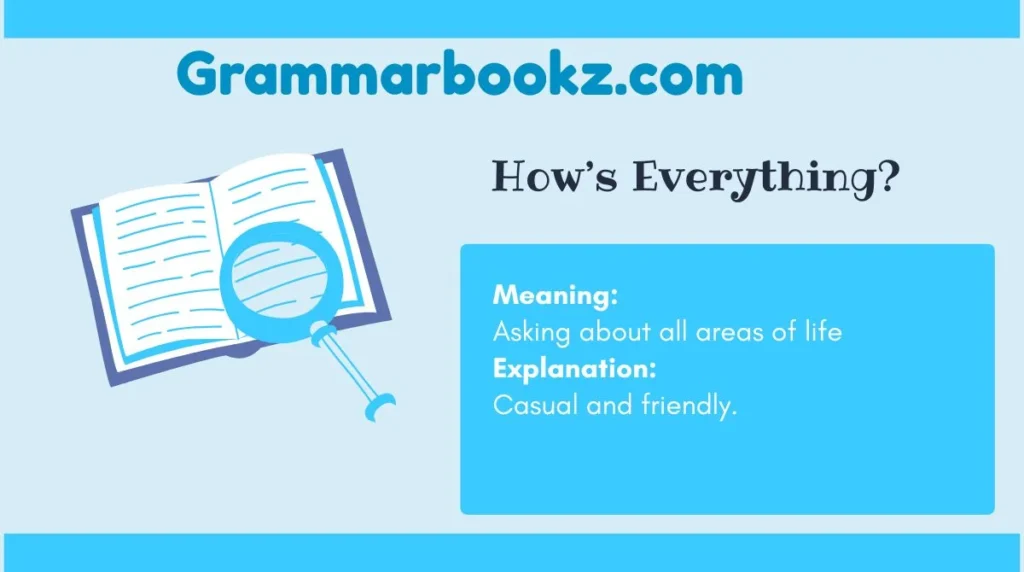
Meaning: Asking about all areas of life
Explanation: Casual and friendly.
Grammar note: Informal question
Example sentence: “Hi! How’s everything with you?”
Best use: Social talk
Worst use: Formal writing
Tone: Friendly
Level: Beginner
Similarity score: 8/10
Replaceability tip: Use for relaxed chats.
What’s New?
Meaning: Asking for recent updates
Explanation: Invites conversation.
Grammar note: Informal phrase
Example sentence: “Hey, what’s new?”
Best use: Friends
Worst use: Business emails
Tone: Casual
Level: Beginner
Similarity score: 6/10
Replaceability tip: Use when you want details.
How Are You Holding Up?
Meaning: Asking about coping
Explanation: Shows care during stress.
Grammar note: Phrasal verb
Example sentence: “I know it’s been tough. How are you holding up?”
Best use: Emotional situations
Worst use: Small talk
Tone: Soft
Level: Intermediate
Similarity score: 5/10
Replaceability tip: Use with care.
How Have Things Been Going?
Meaning: Asking about progress
Explanation: Thoughtful and polite.
Grammar note: Present perfect continuous
Example sentence: “How have things been going at your new job?”
Best use: Workplace, email
Worst use: Quick chats
Tone: Professional
Level: Intermediate
Similarity score: 7/10
Replaceability tip: Use when discussing progress.
Hope All Is Well
Meaning: Polite goodwill
Explanation: Very common in professional writing.
Grammar note: Statement phrase
Example sentence: “Hope all is well. Please see the attached file.”
Best use: Emails
Worst use: Spoken English
Tone: Formal
Level: Beginner
Similarity score: 6/10
Replaceability tip: Keep emails polite.
How’s Your Day Going?
Meaning: Asking about today
Explanation: Friendly and present-focused.
Grammar note: Informal question
Example sentence: “Hey, how’s your day going so far?”
Best use: Work chats
Worst use: Formal writing
Tone: Friendly
Level: Beginner
Similarity score: 8/10
Replaceability tip: Good for daily interaction.
How Are You Feeling Today?
Meaning: Asking about health or mood
Explanation: Caring and personal.
Grammar note: Question phrase
Example sentence: “You looked tired earlier. How are you feeling today?”
Best use: Supportive talk
Worst use: Formal meetings
Tone: Soft
Level: Beginner
Similarity score: 7/10
Replaceability tip: Use when concern is real.
What’s Been Going On?
Meaning: Asking for updates
Explanation: Invites longer answers.
Grammar note: Present perfect phrase
Example sentence: “We haven’t talked in a while. What’s been going on?”
Best use: Friends
Worst use: Professional emails
Tone: Casual
Level: Intermediate
Similarity score: 6/10
Replaceability tip: Use to deepen conversation.
Mini Dialogue Examples
Formal: A: “Good afternoon. How have you been?” B: “Very well, thank you.”
Informal: A: “Hey! What’s up?” B: “Not much, you?”
Email: “Dear Alex, I hope you’re doing well. I’m writing regarding our meeting.”
Mistakes to Avoid
- Using casual phrases in formal emails
- Overusing one phrase
- Asking deeply personal alternatives in business
- Mixing slang with formal tone
- Forgetting cultural tone
- Using greetings in academic writing
Cultural and Tone Tips
In US English, casual greetings are common. In UK English, people prefer softer and polite forms. In social English, tone matters more than words. Friendly voice changes meaning.
Comparison Table
| Phrase | Tone | Best context | Professional level | Example |
|---|---|---|---|---|
| How have you been? | Friendly | Reconnecting | Medium | How have you been lately? |
| I hope you’re doing well | Professional | High | I hope you’re doing well. | |
| What’s up? | Casual | Friends | Low | What’s up? |
| How do you do? | Formal | Meetings | High | How do you do? |
| How’s your day going? | Friendly | Workplace | Medium | How’s your day going? |
FAQs
Is “how are you” rude?
No. It is polite but basic.
Is it okay in emails?
Yes, but better alternatives exist.
What is the most formal alternative?
“How do you do?” or “I hope you’re doing well.”
What is the most polite alternative?
“How have you been?”
What should beginners use?
“How’s it going?”
Can I use it at work?
Yes, in casual situations.
Conclusion
Using different ways to say “how are you” makes your English sound alive. It helps you match the moment. It shows respect. It builds connection. One phrase cannot fit every situation.
When you choose the right words, people listen more closely. Practice these expressions in real conversations. Try them in emails. Test them at work.
Over time, your confidence and fluency will grow.

John Lee is an education-focused writer with a strong interest in English grammar and language learning.
He creates clear, student-friendly content to help learners improve their grammar skills with confidence.