The phrase “how much” is one of the first expressions English learners use. It helps us ask about price, quantity, degree, or importance. Simple. Useful. Powerful.
But using “how much” all the time can sound repetitive, basic, or even unprofessional in formal situations.
In English, word choice changes tone. A small shift can make you sound polite, confident, academic, friendly, or business-ready.
This matters in emails, meetings, essays, interviews, and daily conversation.
Using alternatives also helps you:
- Sound more fluent
- Avoid awkward repetition
- Match the situation better
Example contrast:
- Informal: How much does it cost?
- Formal: Could you tell me the total cost?
Same meaning. Very different tone.
This guide will help you choose the right alternative for the right moment.
Other Ways to Say How Much I Love You
Expressing love does not always have to be limited to the simple phrase “I love you.” Sometimes using different words can make your feelings sound deeper, more personal, and more meaningful. There are many beautiful ways to show affection through language. For example, you can say “I adore you,” “You mean the world to me,” “I’m crazy about you,” or “My heart belongs to you.”
These expressions help convey strong emotions while adding variety to everyday conversations. Using different phrases can also make your message feel more sincere and heartfelt, especially in romantic relationships or close friendships. Choosing the right words depends on the situation and the level of emotion you want to express. By learning alternative ways to say how much you love someone, you can communicate your feelings more clearly and creatively, making your message warmer and more memorable for the person who receives it.
What Does “How Much” Mean?
“How much” is a question phrase used to ask about:
- Price (How much is the ticket?)
- Quantity (How much water do you need?)
- Degree or importance (How much does it matter?)
Grammar form:
- Question phrase (used with verbs like is, does, costs, matters)
Similar expressions:
- What is the price of
- To what extent
- How many (for countable nouns)
Opposite tone ideas:
- Casual → What’s the damage?
- Formal → What is the total amount?
Sample sentences:
- How much time do we have left?
- How much experience do you have?
When to Use “How Much”
Spoken English
Very common and natural in daily conversation.
Business English
Acceptable, but often replaced with more polished phrases.
Emails / Messages
Fine for internal emails. Risky in formal or client emails.
Social Media
Perfect for casual posts, comments, and chats.
Academic Writing
Usually avoided. Replaced with formal structures.
Professional Meetings
Works in discussion, but alternatives sound more confident.
Is “How Much” Polite or Professional?
Tone levels:
- Polite: Yes
- Neutral: Yes
- Strong: No
- Soft: Yes
- Formal: Sometimes
- Informal: Very common
Etiquette tip:
Use “how much” with friends and coworkers you know well.
Avoid it in corporate emails, proposals, or academic writing. Choose formal alternatives instead.
Pros & Cons of Using “How Much”
✔ Pros:
- Easy to understand
- Beginner-friendly
- Natural in speech
- Works in many situations
✘ Cons:
- Sounds basic in professional settings
- Overused by learners
- Weak for academic or business writing
Quick Alternatives List (Fast Help)
- What is the cost of
- How many
- To what extent
- What amount
- What is the price of
- How significant is
- What level of
- How far
- What degree of
- How expensive
- What quantity
- What value does
- How great is
Main Alternatives Explained
What Is the Cost of
Meaning: Asking about price.
Explanation: A clear, professional alternative used in business and formal writing.
Grammar Note: Formal question phrase.
Example Sentence: What is the cost of the annual subscription?
Best Use: Emails, workplace, business
Worst Use: Casual chat with friends
Tone: Formal, professional
Level: Beginner
Similarity Score: 9/10
Replaceability Tip: Use when money is the focus.
How Many
Meaning: Asking about quantity of countable items.
Explanation: Used instead of how much with countable nouns.
Grammar Note: Question phrase for countable nouns.
Example Sentence: How many reports do we need?
Best Use: All contexts
Worst Use: With uncountable nouns
Tone: Neutral
Level: Beginner
Similarity Score: 8/10
Replaceability Tip: Use for numbers, not mass.
To What Extent
Meaning: Asking about degree or impact.
Explanation: Common in academic and formal discussion.
Grammar Note: Formal expression.
Example Sentence: To what extent did the policy affect sales?
Best Use: Academic writing, reports
Worst Use: Casual conversation
Tone: Formal
Level: Advanced
Similarity Score: 7/10
Replaceability Tip: Use when discussing influence or impact.
What Is the Price of
Meaning: Asking about cost.
Explanation: Slightly more formal than how much.
Grammar Note: Question phrase.
Example Sentence: What is the price of this service?
Best Use: Shops, emails
Worst Use: Very casual talk
Tone: Polite
Level: Beginner
Similarity Score: 9/10
Replaceability Tip: Good for polite questions.
How Expensive
Meaning: Asking about cost level.
Explanation: Focuses on affordability, not exact price.
Grammar Note: Adjective-based question.
Example Sentence: How expensive is the repair?
Best Use: Conversation
Worst Use: Formal documents
Tone: Friendly
Level: Beginner
Similarity Score: 8/10
Replaceability Tip: Use when cost feeling matters.
What Amount
Meaning: Asking about quantity or size.
Explanation: Sounds structured and formal.
Grammar Note: Noun phrase.
Example Sentence: What amount of funding is required?
Best Use: Reports, proposals
Worst Use: Text messages
Tone: Formal
Level: Intermediate
Similarity Score: 7/10
Replaceability Tip: Use in official contexts.
How Significant Is
Meaning: Asking about importance.
Explanation: Focuses on value or impact, not number.
Grammar Note: Adjective phrase.
Example Sentence: How significant is this change?
Best Use: Meetings, analysis
Worst Use: Price questions
Tone: Professional
Level: Intermediate
Similarity Score: 6/10
Replaceability Tip: Use for importance, not quantity.
What Level of
Meaning: Asking about degree.
Explanation: Often used in assessments and evaluations.
Grammar Note: Noun phrase.
Example Sentence: What level of experience is required?
Best Use: Job descriptions
Worst Use: Casual chat
Tone: Professional
Level: Intermediate
Similarity Score: 7/10
Replaceability Tip: Use in HR or formal writing.
How Far
Meaning: Asking about distance or progress.
Explanation: Abstract or physical measurement.
Grammar Note: Question phrase.
Example Sentence: How far are we from completion?
Best Use: Conversation, meetings
Worst Use: Price discussion
Tone: Neutral
Level: Beginner
Similarity Score: 6/10
Replaceability Tip: Use for progress or distance.
What Degree of
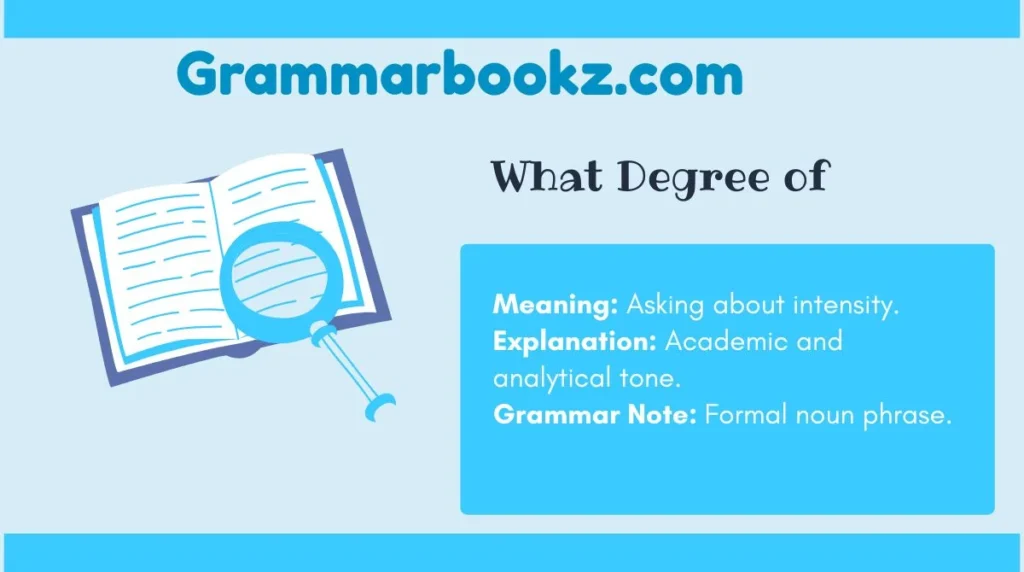
Meaning: Asking about intensity.
Explanation: Academic and analytical tone.
Grammar Note: Formal noun phrase.
Example Sentence: What degree of risk is involved?
Best Use: Academic, legal
Worst Use: Casual talk
Tone: Formal
Level: Advanced
Similarity Score: 6/10
Replaceability Tip: Use in serious analysis.
How Great Is
Meaning: Asking about size or importance.
Explanation: Emotional or evaluative tone.
Grammar Note: Adjective phrase.
Example Sentence: How great is the demand?
Best Use: Presentations
Worst Use: Exact numbers
Tone: Neutral
Level: Intermediate
Similarity Score: 7/10
Replaceability Tip: Use for general size, not exact data.
What Quantity
Meaning: Asking about amount.
Explanation: Very formal and technical.
Grammar Note: Noun phrase.
Example Sentence: What quantity should be ordered?
Best Use: Logistics, science
Worst Use: Casual English
Tone: Formal
Level: Advanced
Similarity Score: 7/10
Replaceability Tip: Use in technical fields.
What Value Does
Meaning: Asking about importance or worth.
Explanation: Abstract and professional.
Grammar Note: Verb phrase.
Example Sentence: What value does this add to the project?
Best Use: Business strategy
Worst Use: Simple price talk
Tone: Professional
Level: Advanced
Similarity Score: 5/10
Replaceability Tip: Use for benefits, not money.
Mini Dialogue Examples
Formal:
Client: Could you tell me the total cost of the package?
Manager: Certainly. I’ll send the breakdown today.
Informal:
Friend: How much was the phone?
You: Not much. I got a discount.
Business Email:
Could you clarify the amount required for the initial payment?
Mistakes to Avoid
- Using how much with countable nouns
- Using casual phrases in formal emails
- Overusing one alternative everywhere
- Mixing tone (formal words in casual chat)
- Asking about money too directly in professional culture
- Forgetting context and audience
Cultural & Tone Tips
UK English:
More indirect. Formal alternatives are preferred.
US English:
Direct but polite. How much is acceptable, but variety matters.
Casual Social English:
Short, friendly phrases work best. Formal ones feel strange.
Comparison Table
| Phrase | Tone | Best Context | Professional Level | Example |
|---|---|---|---|---|
| What is the cost of | Formal | Emails | High | What is the cost of delivery? |
| How many | Neutral | All | Medium | How many files? |
| To what extent | Formal | Academic | High | To what extent did it help? |
| How expensive | Friendly | Spoken | Low | How expensive is it? |
| What value does | Professional | Business | High | What value does this bring? |
FAQs
Is “how much” rude?
No. It’s neutral, but can sound basic.
Is it okay in emails?
Yes, but not ideal for formal emails.
What is the most formal alternative?
To what extent or What amount.
What is the most polite alternative?
Could you tell me the cost of…
What should beginners use?
How much and how many.
Can I use these in exams?
Yes. Formal alternatives score better.
Conclusion
Learning alternatives to “how much” helps you speak and write with confidence. It improves clarity. It improves tone. And it helps you sound more natural in real English.
Strong word choice matters in business, study, and daily life. The more options you know, the more control you have over your message.
Practice using different expressions in emails, conversations, and writing. Over time, your English will feel smoother, smarter, and more professional.

John Lee is an education-focused writer with a strong interest in English grammar and language learning.
He creates clear, student-friendly content to help learners improve their grammar skills with confidence.