
The phrase “keep up the good work” is one of the most common ways to praise someone in English. It shows encouragement, approval, and motivation.
Teachers say it to students. Managers say it to employees. Friends say it to each other.
But using the same phrase again and again can sound flat, lazy, or even impersonal. In professional settings, it may feel too casual. In formal writing, it may not fit at all.
That’s why learning alternative expressions matters.
Word choice affects tone, professionalism, and clarity. The right phrase can build confidence, strengthen relationships, and show emotional intelligence. The wrong one can sound awkward or weak.
Compare:
- Formal: Excellent work. Please continue this level of performance.
- Informal: Nice job—keep it going!
Same idea. Very different impact.
What Does “Keep Up the Good Work” Mean?
Simple definition:
It means continue doing well or maintain your current high performance.
Grammar form:
This is an imperative phrase (a command used politely for encouragement).
Tone-related synonyms:
- Positive: Great job, Well done, Nice work
- Stronger: Outstanding performance, Excellent contribution
Opposite ideas:
- You need to improve
- This isn’t good enough
Example sentences:
- You handled the project perfectly. Keep up the good work.
- Your progress has been amazing—keep it up.
When to Use “Keep Up the Good Work”
Spoken English
Used naturally in daily conversations, especially for praise.
Business English
Common in team settings, but slightly informal for senior-level communication.
Emails / Messages
Fine for friendly or internal emails. Less suitable for formal corporate emails.
Social Media
Very common and natural. Often used in comments or replies.
Academic Writing
Not recommended. Too conversational.
Professional Meetings
Acceptable in casual meetings, but formal alternatives are better in presentations or reviews.
Is “Keep Up the Good Work” Polite or Professional?
The phrase is polite, friendly, and positive, but its professionalism depends on context.
Tone levels:
- Polite: Yes
- Neutral: Yes
- Strong: No
- Soft: Yes
Formal vs Informal:
- Informal to semi-professional
- Not ideal for formal reports or executive emails
Etiquette tip:
Better for team chats and encouragement. Avoid in highly formal corporate communication.
Pros & Cons of Using “Keep Up the Good Work”
✔ Pros:
- Easy to understand
- Friendly and motivating
- Suitable for learners
✘ Cons:
- Overused
- Sounds generic
- Too casual in formal settings
Quick Alternatives List (For Busy Readers)
- Well done
- Great job
- Excellent work
- Nice going
- Impressive effort
- Outstanding performance
- You’re doing great
- Keep it up
- Strong work
- Fantastic progress
- Much appreciated
- Commendable work
- Splendid job
- Bravo
- Hats off to you
- Solid contribution
- Exceptional effort
- Continue the excellent work
- Your efforts are appreciated
- You’re on the right track
- This is great progress
21 Powerful Alternatives to “Keep Up the Good Work”
Well Done
Meaning:
You did something successfully.
Explanation:
Simple, clear praise. Works in most situations.
Grammar Note:
Interjection / phrase
Example Sentence:
Well done on completing the report ahead of time.
Best Use:
Workplace, emails, spoken English
Worst Use:
Highly formal documents
Tone:
Friendly, neutral
Level:
Beginner
Similarity Score:
8/10
Replaceability Tip:
Use when you want short, clear praise.
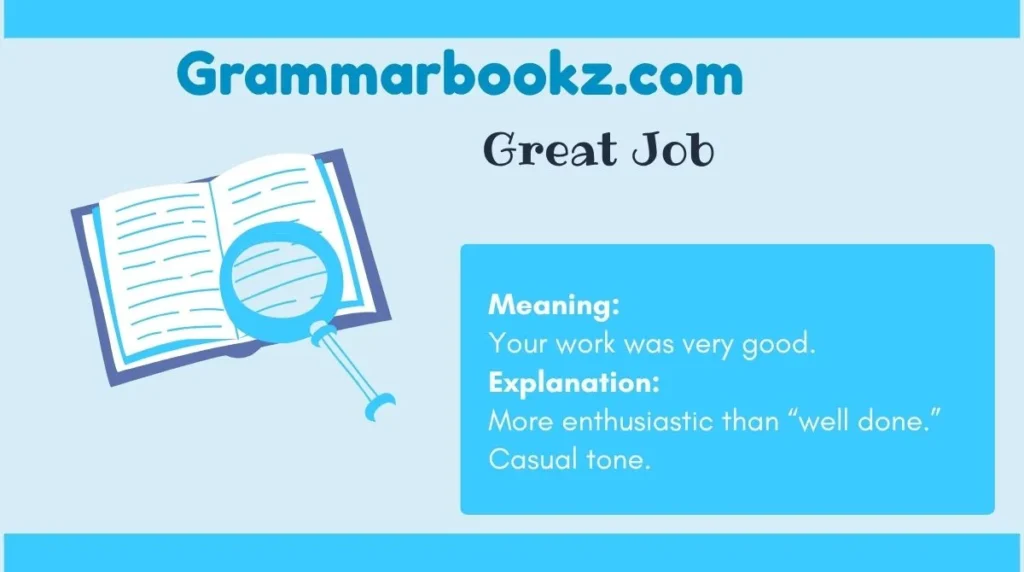
Great Job
Meaning:
Your work was very good.
Explanation:
More enthusiastic than “well done.” Casual tone.
Grammar Note:
Noun phrase
Example Sentence:
Great job handling that client call.
Best Use:
Informal workplace, texts
Worst Use:
Formal business writing
Tone:
Friendly
Level:
Beginner
Similarity Score:
8/10
Replaceability Tip:
Perfect for team encouragement.
Excellent Work
Meaning:
Your work meets a high standard.
Explanation:
More professional and stronger than “great job.”
Grammar Note:
Adjective + noun
Example Sentence:
Excellent work on the quarterly analysis.
Best Use:
Emails, professional settings
Worst Use:
Casual chat between friends
Tone:
Professional
Level:
Intermediate
Similarity Score:
9/10
Replaceability Tip:
Use in performance feedback.
Outstanding Performance
Meaning:
Work that is far above average.
Explanation:
Formal and powerful praise. Often used by managers.
Grammar Note:
Formal noun phrase
Example Sentence:
Your leadership showed outstanding performance.
Best Use:
Formal reviews, reports
Worst Use:
Casual conversation
Tone:
Strong, professional
Level:
Advanced
Similarity Score:
7/10
Replaceability Tip:
Choose this when results truly stand out.
Impressive Effort
Meaning:
The work shows strong effort and skill.
Explanation:
Focuses on effort, not just results.
Grammar Note:
Adjective + noun
Example Sentence:
That was an impressive effort under pressure.
Best Use:
Encouragement, coaching
Worst Use:
Formal academic writing
Tone:
Supportive
Level:
Intermediate
Similarity Score:
7/10
Replaceability Tip:
Use when effort matters more than outcome.
You’re Doing Great
Meaning:
Your progress is good.
Explanation:
Encouraging and supportive. Very friendly.
Grammar Note:
Statement sentence
Example Sentence:
You’re doing great—keep learning.
Best Use:
Teaching, mentoring
Worst Use:
Formal business emails
Tone:
Soft, friendly
Level:
Beginner
Similarity Score:
8/10
Replaceability Tip:
Use to boost confidence.
Keep It Up
Meaning:
Continue what you’re doing.
Explanation:
Short, casual, energetic.
Grammar Note:
Phrasal verb
Example Sentence:
Nice work—keep it up!
Best Use:
Casual speech, social media
Worst Use:
Formal writing
Tone:
Informal
Level:
Beginner
Similarity Score:
9/10
Replaceability Tip:
Best informal replacement.
Commendable Work
Meaning:
Work deserving praise.
Explanation:
Polite and formal. Often written.
Grammar Note:
Formal adjective phrase
Example Sentence:
Your attention to detail is commendable.
Best Use:
Professional emails
Worst Use:
Casual speech
Tone:
Formal
Level:
Advanced
Similarity Score:
6/10
Replaceability Tip:
Use when you want respect, not warmth.
Strong Work
Meaning:
Reliable and effective work.
Explanation:
Neutral and professional.
Grammar Note:
Adjective + noun
Example Sentence:
Strong work on the presentation.
Best Use:
Workplace feedback
Worst Use:
Emotional encouragement
Tone:
Neutral
Level:
Intermediate
Similarity Score:
7/10
Replaceability Tip:
Good for concise feedback.
Fantastic Progress
Meaning:
Clear improvement over time.
Explanation:
Highlights growth.
Grammar Note:
Adjective + noun
Example Sentence:
You’ve made fantastic progress this month.
Best Use:
Teaching, coaching
Worst Use:
Formal reports
Tone:
Positive
Level:
Intermediate
Similarity Score:
7/10
Replaceability Tip:
Use when improvement is visible.
Much Appreciated
Meaning:
Your effort is valued.
Explanation:
Grateful and polite.
Grammar Note:
Passive phrase
Example Sentence:
Your support is much appreciated.
Best Use:
Emails
Worst Use:
Spoken praise
Tone:
Professional
Level:
Intermediate
Similarity Score:
5/10
Replaceability Tip:
Use to thank, not motivate.
Bravo
Meaning:
Expression of praise.
Explanation:
Short, expressive, emotional.
Grammar Note:
Interjection
Example Sentence:
Bravo on a successful launch.
Best Use:
Public praise
Worst Use:
Formal emails
Tone:
Expressive
Level:
Intermediate
Similarity Score:
6/10
Replaceability Tip:
Best for celebration moments.
Hats Off to You
Meaning:
You deserve respect.
Explanation:
Idiomatic and friendly.
Grammar Note:
Idiom
Example Sentence:
Hats off to you for meeting the deadline.
Best Use:
Spoken English
Worst Use:
Academic writing
Tone:
Friendly
Level:
Advanced
Similarity Score:
6/10
Replaceability Tip:
Use when effort was challenging.
Exceptional Effort
Meaning:
Very high-quality effort.
Explanation:
Formal and strong.
Grammar Note:
Formal noun phrase
Example Sentence:
This reflects exceptional effort from the team.
Best Use:
Performance reviews
Worst Use:
Casual chat
Tone:
Strong
Level:
Advanced
Similarity Score:
7/10
Replaceability Tip:
Use for top performers.
You’re on the Right Track
Meaning:
Your direction is correct.
Explanation:
Encouraging and instructional.
Grammar Note:
Idiom
Example Sentence:
You’re on the right track—keep refining it.
Best Use:
Learning environments
Worst Use:
Final evaluations
Tone:
Supportive
Level:
Intermediate
Similarity Score:
6/10
Replaceability Tip:
Use during learning, not completion.
Solid Contribution
Meaning:
Dependable input.
Explanation:
Professional and neutral.
Grammar Note:
Noun phrase
Example Sentence:
That was a solid contribution to the project.
Best Use:
Team meetings
Worst Use:
Emotional praise
Tone:
Neutral
Level:
Advanced
Similarity Score:
5/10
Replaceability Tip:
Use for balanced feedback.
Splendid Job
Meaning:
Very good work.
Explanation:
Slightly old-fashioned but positive.
Grammar Note:
Adjective + noun
Example Sentence:
Splendid job organizing the event.
Best Use:
UK English
Worst Use:
Formal writing
Tone:
Friendly
Level:
Intermediate
Similarity Score:
7/10
Replaceability Tip:
Works well in British English.
Your Efforts Are Appreciated
Meaning:
Your work is valued.
Explanation:
Polite and professional.
Grammar Note:
Passive structure
Example Sentence:
Your efforts are appreciated by the team.
Best Use:
Emails, workplace
Worst Use:
Casual conversation
Tone:
Professional
Level:
Intermediate
Similarity Score:
5/10
Replaceability Tip:
Use for gratitude-focused praise.
This Is Great Progress
Meaning:
Clear improvement.
Explanation:
Encouraging and motivating.
Grammar Note:
Statement phrase
Example Sentence:
This is great progress—keep learning.
Best Use:
Teaching
Worst Use:
Formal evaluations
Tone:
Positive
Level:
Beginner
Similarity Score:
7/10
Replaceability Tip:
Good for learners.
Continue the Excellent Work
Meaning:
Maintain high performance.
Explanation:
Closest formal alternative.
Grammar Note:
Formal imperative
Example Sentence:
Please continue the excellent work.
Best Use:
Professional emails
Worst Use:
Casual texts
Tone:
Formal
Level:
Advanced
Similarity Score:
9/10
Replaceability Tip:
Best formal replacement.
Mini Dialogue Examples
Formal
Manager: Your report was very detailed.
Employee: Thank you.
Manager: Please continue the excellent work.
Informal
Friend: I finally finished the course!
You: Nice! Keep it up.
Business Email
Dear Team,
Excellent work on meeting the deadline. Your efforts are appreciated.
Mistakes to Avoid
- Using casual phrases in formal emails
- Repeating the same praise too often
- Using slang in professional settings
- Overpraising small tasks
- Mixing tone levels incorrectly
- Using praise without specifics
Cultural & Tone Tips
US English:
Friendly and direct praise is common.
UK English:
Often softer and more understated.
Casual Social English:
Short praise like nice one is common.
Comparison Table
| Phrase | Tone | Best Context | Professional Level | Example |
|---|---|---|---|---|
| Excellent work | Professional | High | Excellent work on the project | |
| Keep it up | Informal | Speech | Low | Keep it up! |
| Commendable work | Formal | Review | High | Commendable work |
| Great job | Friendly | Team | Medium | Great job today |
| Continue the excellent work | Formal | Very High | Please continue |
FAQs
Is “keep up the good work” rude?
No, it’s polite and positive.
Is it okay in emails?
Yes, but mostly in informal or internal emails.
What is the most formal alternative?
Continue the excellent work.
What is the most polite alternative?
Your efforts are appreciated.
What should beginners use?
Well done or great job.
Is “keep it up” professional?
Not usually. It’s informal.
Conclusion
Using only one phrase limits your English. Learning alternatives to “keep up the good work” helps you sound natural, confident, and professional.
Different situations need different tones. Friendly praise builds warmth. Formal praise builds respect.
By choosing the right words, you improve communication and relationships. Practice these expressions in emails, meetings, and conversations.
Over time, your English will feel smoother and more powerful.

John Lee is an education-focused writer with a strong interest in English grammar and language learning.
He creates clear, student-friendly content to help learners improve their grammar skills with confidence.