The phrase “looking forward to the interview” is common in English. You see it in emails, cover letters, LinkedIn messages, and spoken conversation.
It sounds polite and positive. But when everyone uses the same words, the message can feel flat or repetitive.
That is why learning alternative expressions matters. The words you choose affect tone, professionalism, and clarity. A small change can make you sound more confident, more respectful, or more natural.
This is especially important in business communication, job applications, academic writing, and professional emails.
Using varied language also shows strong English skills. It helps you match your tone to the situation and the audience.
Formal: I appreciate the opportunity to meet with you.
Informal: Excited to chat soon!
Both express the same idea, but they feel very different.
Other Ways to Say Looking Forward to the Interview (Sample)
When preparing for an interview, choosing the right words can help you sound professional and confident. Instead of repeatedly saying “looking forward to the interview,” you can use a variety of alternative phrases to make your communication more engaging.
For example, you might say “I am excited about the opportunity to discuss my qualifications,” or “I appreciate the chance to meet and learn more about the role.” Another option is “I am eager to speak with you and explore how I can contribute to your team.”
These alternatives not only express enthusiasm but also leave a positive impression on the interviewer. Using diverse expressions can enhance your email tone and improve your overall professional communication skills.
What Does “Looking Forward to the Interview” Mean?
Student-friendly meaning:
It means you feel positive, interested, and ready to attend the interview in the future.
Grammar form:
This phrase uses a verb phrase with a gerund.
“Look forward to” is followed by a noun or -ing verb.
Common synonyms:
- Excited about
- Anticipating
- Eager for
Opposite tones:
- Dreading
- Worried about
- Not interested in
Example sentences:
- I am looking forward to the interview next week.
- She said she was looking forward to meeting the team.
When to Use “Looking Forward to the Interview”
Spoken English
Used in polite conversation before an interview. It sounds friendly and calm.
Business English
Common in professional emails and cover letters. Safe and respectful.
Emails and messages
Often placed at the end of a message as a polite closing line.
Social media
Used on LinkedIn or professional posts to show enthusiasm.
Academic writing
Rarely used. Sounds too conversational for formal essays.
Professional meetings
Acceptable when speaking politely to interviewers or recruiters.
Is “Looking Forward to the Interview” Polite or Professional?
This phrase is generally polite and professional. It shows interest without sounding too emotional.
Polite tone: Yes
Neutral tone: Yes
Strong tone: No
Soft tone: Yes
Formal vs informal:
- Slightly formal
- Safe for most workplace situations
Etiquette tip:
Good for emails and interviews. Avoid repeating it too often in the same message. Overuse can sound lazy or generic.
Pros and Cons of Using “Looking Forward to the Interview”
✔ Pros:
- Polite and respectful
- Easy to understand
- Safe for most situations
- Widely accepted in professional English
✘ Cons:
- Very common
- Can sound boring or automatic
- Not very expressive
- Lacks personal tone
Quick Alternatives List (Fast Use)
- I appreciate the opportunity to interview
- I am eager to discuss the role
- I am excited to meet with you
- Thank you for the opportunity
- I welcome the chance to speak with you
- I am pleased to attend the interview
- I look forward to our conversation
- I am enthusiastic about this opportunity
- I am keen to learn more about the role
- I anticipate our meeting
- I value the opportunity to interview
- I am glad to move forward in the process
- I am excited to discuss my qualifications
- I look forward to meeting the team
- Thank you for considering my application
Strong Alternatives to “Looking Forward to the Interview”
I appreciate the opportunity to interview
Meaning:
You are thankful for the chance to interview.
Explanation:
This sounds respectful and mature. It focuses on gratitude rather than emotion.
Grammar note:
Formal verb phrase.
Example sentence:
I appreciate the opportunity to interview for this position.
Best use:
Formal emails, cover letters, corporate roles.
Worst use:
Casual text messages.
Tone:
Professional, formal.
Level:
Intermediate.
Similarity score:
8/10.
Replaceability tip:
Use this when you want to sound respectful and serious.
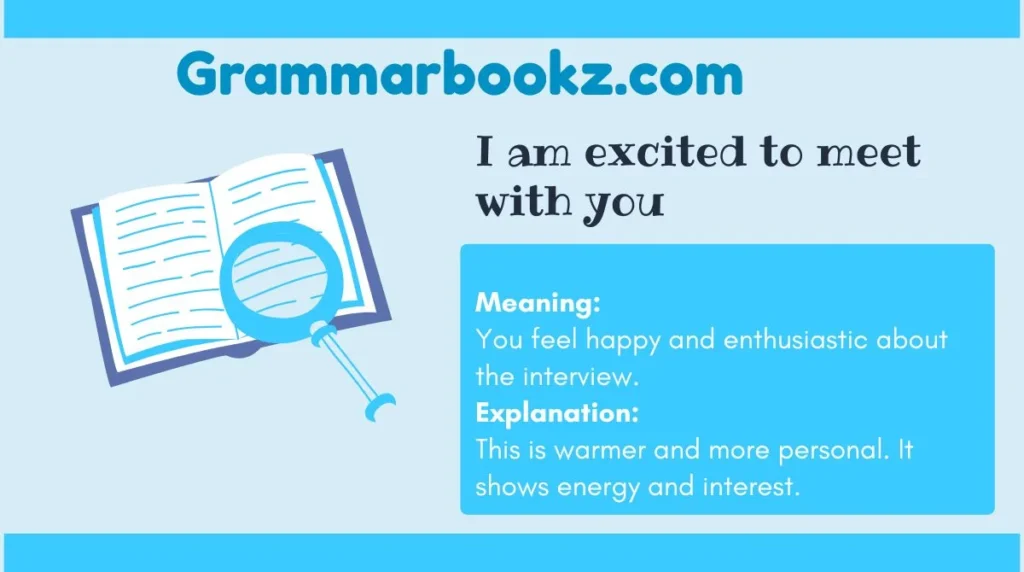
I am excited to meet with you
Meaning:
You feel happy and enthusiastic about the interview.
Explanation:
This is warmer and more personal. It shows energy and interest.
Grammar note:
Adjective phrase.
Example sentence:
I am excited to meet with you and discuss the role.
Best use:
Emails, spoken interviews, LinkedIn.
Worst use:
Very formal or conservative industries.
Tone:
Friendly, positive.
Level:
Beginner.
Similarity score:
9/10.
Replaceability tip:
Choose this when enthusiasm is welcome.
I look forward to our conversation
Meaning:
You are ready and interested in talking.
Explanation:
This sounds more natural and less repetitive than the original phrase.
Grammar note:
Verb phrase.
Example sentence:
I look forward to our conversation on Thursday.
Best use:
Emails, professional messages.
Worst use:
Very casual chats.
Tone:
Professional, neutral.
Level:
Beginner.
Similarity score:
9/10.
Replaceability tip:
Use when you want a safe but polished option.
I am eager to discuss the role
Meaning:
You strongly want to talk about the job.
Explanation:
This shows motivation and focus on the position.
Grammar note:
Adjective phrase.
Example sentence:
I am eager to discuss how my skills fit this role.
Best use:
Cover letters, interviews.
Worst use:
Social media comments.
Tone:
Strong, professional.
Level:
Intermediate.
Similarity score:
8/10.
Replaceability tip:
Good when highlighting interest in responsibilities.
I welcome the opportunity to meet
Meaning:
You politely accept and value the interview.
Explanation:
This sounds calm, formal, and respectful.
Grammar note:
Formal verb phrase.
Example sentence:
I welcome the opportunity to meet with your team.
Best use:
Corporate emails, formal letters.
Worst use:
Casual conversation.
Tone:
Formal, polite.
Level:
Advanced.
Similarity score:
7/10.
Replaceability tip:
Use when writing to senior professionals.
I am pleased to attend the interview
Meaning:
You are happy and satisfied about the interview.
Explanation:
This sounds professional but slightly distant.
Grammar note:
Adjective phrase.
Example sentence:
I am pleased to attend the interview next week.
Best use:
Formal confirmations.
Worst use:
Casual chats.
Tone:
Formal, neutral.
Level:
Intermediate.
Similarity score:
7/10.
Replaceability tip:
Good for confirmation emails.
I am enthusiastic about this opportunity
Meaning:
You feel strong interest and excitement.
Explanation:
This is expressive but still professional.
Grammar note:
Adjective phrase.
Example sentence:
I am enthusiastic about this opportunity and look forward to learning more.
Best use:
Cover letters, interviews.
Worst use:
Very conservative industries.
Tone:
Positive, strong.
Level:
Intermediate.
Similarity score:
8/10.
Replaceability tip:
Use when showing passion matters.
I am keen to learn more about the role
Meaning:
You want more information and discussion.
Explanation:
This feels curious and thoughtful.
Grammar note:
Adjective phrase (British-friendly).
Example sentence:
I am keen to learn more about the role and team.
Best use:
UK English, emails.
Worst use:
Overly casual settings.
Tone:
Professional, soft.
Level:
Intermediate.
Similarity score:
7/10.
Replaceability tip:
Great for UK-based roles.
Thank you for the opportunity
Meaning:
You show appreciation.
Explanation:
Short, polite, and widely used.
Grammar note:
Sentence fragment.
Example sentence:
Thank you for the opportunity to interview.
Best use:
Email endings.
Worst use:
Spoken interviews alone.
Tone:
Polite, neutral.
Level:
Beginner.
Similarity score:
6/10.
Replaceability tip:
Use when you want simple gratitude.
I anticipate our meeting
Meaning:
You expect and prepare for the interview.
Explanation:
This sounds formal and slightly distant.
Grammar note:
Formal verb.
Example sentence:
I anticipate our meeting later this week.
Best use:
Formal writing.
Worst use:
Casual speech.
Tone:
Formal.
Level:
Advanced.
Similarity score:
6/10.
Replaceability tip:
Use in traditional corporate settings.
I am glad to move forward in the process
Meaning:
You are happy about the next step.
Explanation:
This focuses on progress, not emotion.
Grammar note:
Verb phrase.
Example sentence:
I am glad to move forward in the process.
Best use:
Recruitment emails.
Worst use:
Social messages.
Tone:
Professional.
Level:
Intermediate.
Similarity score:
7/10.
Replaceability tip:
Good when talking about hiring stages.
I value the opportunity to interview
Meaning:
You respect and appreciate the chance.
Explanation:
This sounds thoughtful and serious.
Grammar note:
Formal verb phrase.
Example sentence:
I value the opportunity to interview with your organization.
Best use:
Cover letters.
Worst use:
Casual talk.
Tone:
Formal, respectful.
Level:
Advanced.
Similarity score:
7/10.
Replaceability tip:
Use when respect is key.
I look forward to meeting the team
Meaning:
You are excited to meet people.
Explanation:
This feels friendly and human.
Grammar note:
Verb phrase.
Example sentence:
I look forward to meeting the team soon.
Best use:
Culture-focused companies.
Worst use:
Very formal letters.
Tone:
Friendly, professional.
Level:
Beginner.
Similarity score:
9/10.
Replaceability tip:
Use when teamwork matters.
I am excited to discuss my qualifications
Meaning:
You want to show your skills.
Explanation:
This is confident and focused.
Grammar note:
Adjective phrase.
Example sentence:
I am excited to discuss my qualifications further.
Best use:
Interviews, emails.
Worst use:
Humble cultures.
Tone:
Strong, confident.
Level:
Intermediate.
Similarity score:
8/10.
Replaceability tip:
Use when confidence is expected.
I appreciate your consideration
Meaning:
You thank the interviewer politely.
Explanation:
This is formal and courteous.
Grammar note:
Formal phrase.
Example sentence:
I appreciate your consideration and time.
Best use:
Email closings.
Worst use:
Spoken interviews alone.
Tone:
Formal, polite.
Level:
Intermediate.
Similarity score:
6/10.
Replaceability tip:
Good as a closing line.
Mini Dialogue Examples
Formal conversation
Interviewer: We will see you next week.
Candidate: Thank you. I appreciate the opportunity to interview.
Informal conversation
Recruiter: Talk soon!
Candidate: Great, excited to meet with you.
Business email style
Thank you for scheduling the interview. I look forward to our conversation and learning more about the role.
Mistakes to Avoid
- Using “looking forward to” without to + ing
- Sounding too excited in formal emails
- Repeating the same phrase in every message
- Using casual phrases in corporate settings
- Forgetting to match tone with company culture
- Writing very long emotional sentences
- Mixing formal and slang language
Cultural and Tone Tips
US English
Warm and confident language is welcome. “Excited” is common.
UK English
Softer words like “keen” or “pleased” feel more natural.
Casual social English
Short and friendly phrases work best.
Native speakers notice tone quickly. Too much excitement can feel unprofessional. Too much formality can feel cold.
Comparison Table of Top Alternatives
| Phrase | Tone | Best Context | Professional Level | Example |
|---|---|---|---|---|
| I appreciate the opportunity | Formal | High | I appreciate the opportunity to interview | |
| I am excited to meet with you | Friendly | Medium | I am excited to meet with you | |
| I look forward to our conversation | Neutral | Medium | I look forward to our conversation | |
| I am eager to discuss the role | Strong | Interview | Medium | I am eager to discuss the role |
| I welcome the opportunity | Formal | Cover letter | High | I welcome the opportunity to meet |
| I am keen to learn more | Soft | UK roles | Medium | I am keen to learn more |
| Thank you for the opportunity | Polite | Email closing | Medium | Thank you for the opportunity |
FAQs
Is “looking forward to the interview” rude?
No. It is polite and respectful.
Is it okay in emails?
Yes. It is very common in professional emails.
What is the most formal alternative?
“I appreciate the opportunity to interview.”
What is the most polite alternative?
“I welcome the opportunity to meet.”
What should beginners use?
“I am excited to meet with you.”
Can I use “excited” in professional emails?
Yes, but avoid overuse in very formal industries.
Conclusion
Choosing the right words matters more than many learners realize. Saying “looking forward to the interview” is correct, but using alternatives helps you sound confident, natural, and professional.
Different situations need different tones. A formal email, a casual message, and a business interview all require careful word choice.
By learning and practicing these alternatives, you improve clarity and fluency. You also show strong communication skills.
Try using one new phrase in your next email or interview. With practice, your English will feel more natural and powerful.

John Lee is an education-focused writer with a strong interest in English grammar and language learning.
He creates clear, student-friendly content to help learners improve their grammar skills with confidence.